
Marquise Engagement Rings in Solid 9ct, 14ct & 18ct Gold
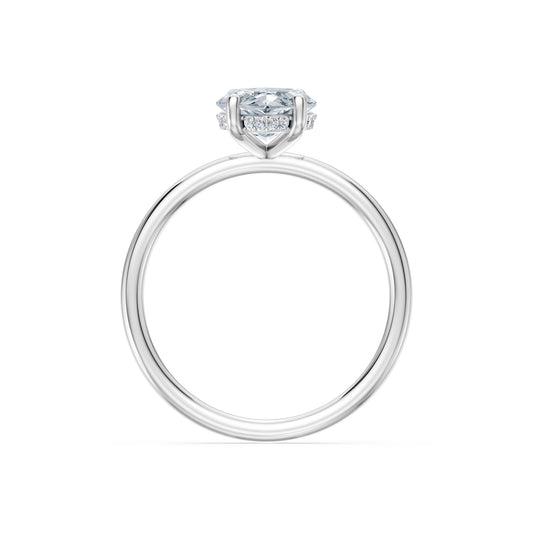
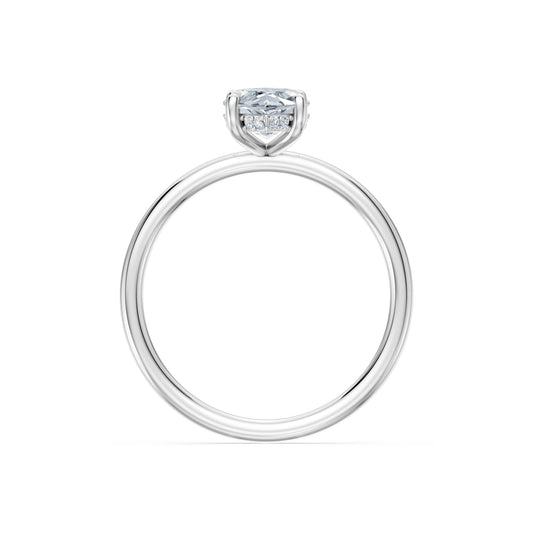
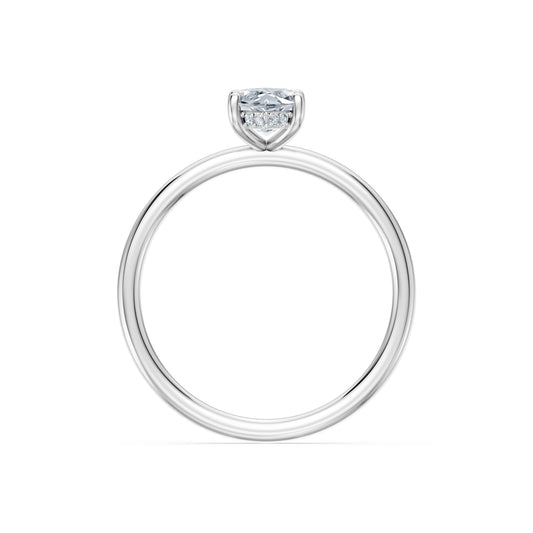
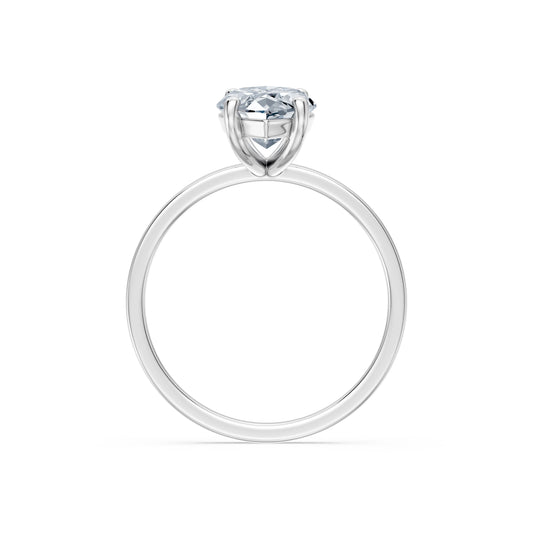
The marquise engagement ring gives you more visible diamond per carat than any other shape. That is not marketing — the long, pointed outline spreads a given weight across a wider face-up area than a round, an oval or a pear, so a marquise reads noticeably larger than its carat figure suggests and stretches the finger while it does it.
Every marquise cut engagement ring here is set in solid 9ct, 14ct or 18ct gold — never plated, never gold-filled — in yellow, white or rose. Prices start at £500, and most of the collection uses lab grown diamonds. Made to order in 10 to 14 days, with V-prongs protecting both points as standard.
-
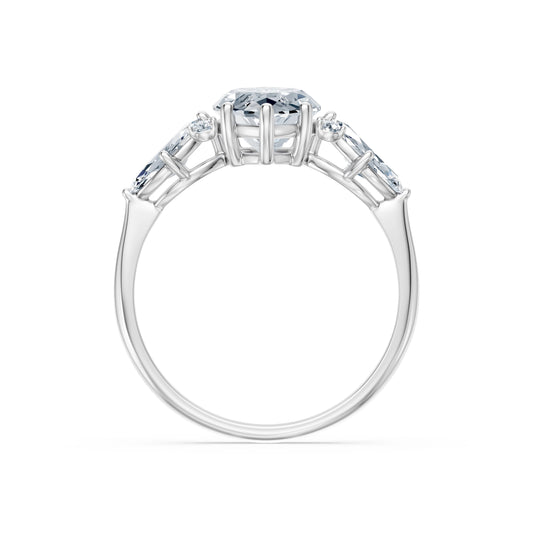
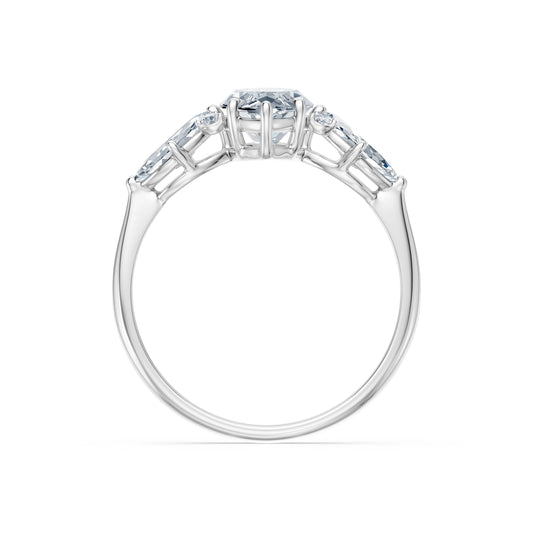
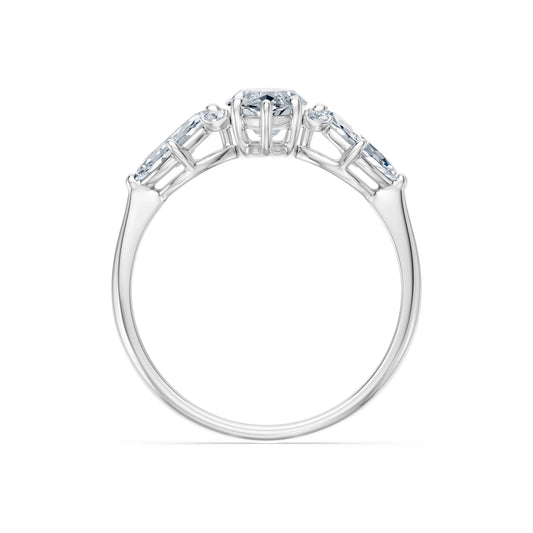
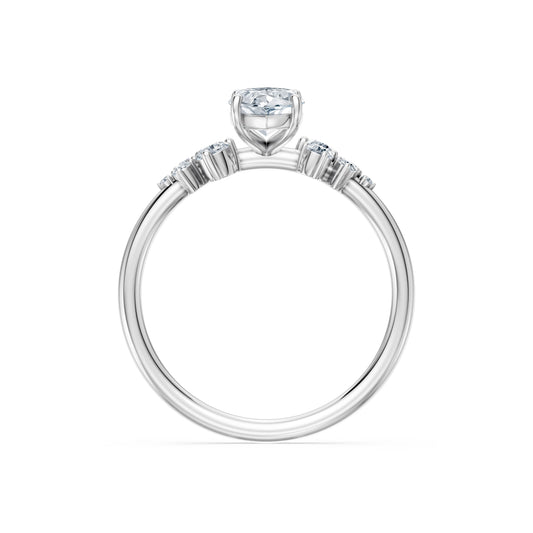
Marquise Lab Grown Diamond Three Stone Engagement Ring 2.0ct | Qutahia Jewellery
Regular price From $3,495.00Regular price -
Marquise Lab Grown Diamond Three Stone Engagement Ring 1.5ct | Qutahia Jewellery
Regular price From $2,790.00Regular price -
Marquise Lab Grown Diamond Three Stone Engagement Ring 1.0ct | Qutahia Jewellery
Regular price From $2,326.00Regular price -
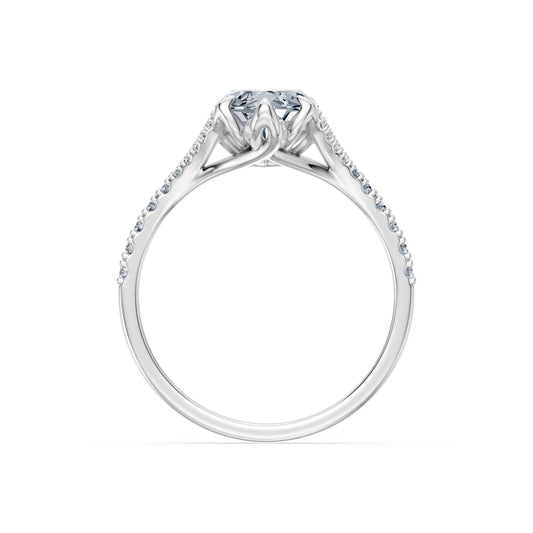
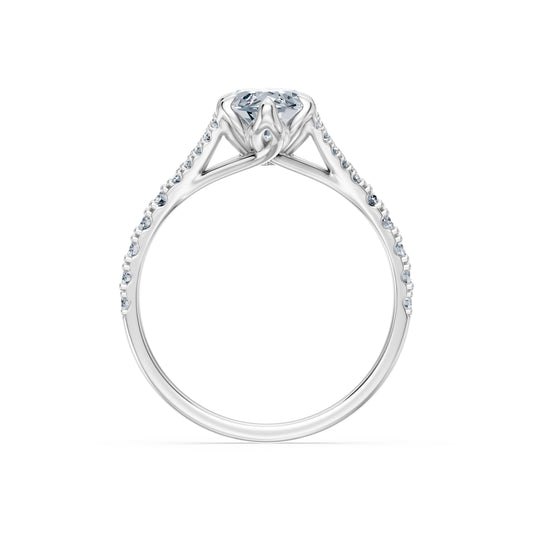
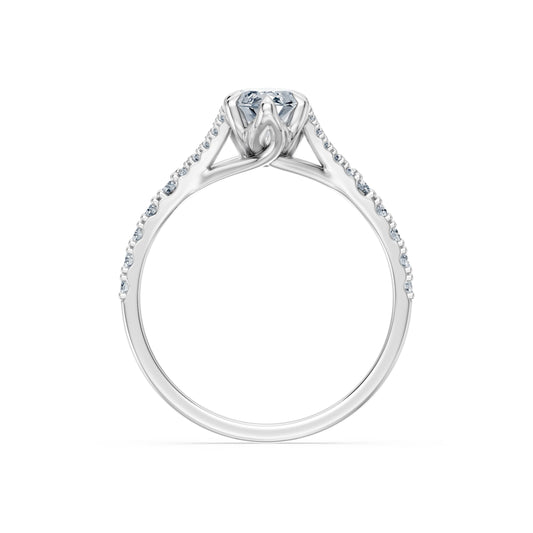
Marquise Lab Grown Diamond Split Shank Engagement Ring 2.0ct | Qutahia Jewellery
Regular price From $3,061.00Regular price -
Marquise Lab Grown Diamond Split Shank Engagement Ring 1.5ct | Qutahia Jewellery
Regular price From $2,310.00Regular price -
Marquise Lab Grown Diamond Split Shank Engagement Ring 1.0ct | Qutahia Jewellery
Regular price From $1,845.00Regular price -
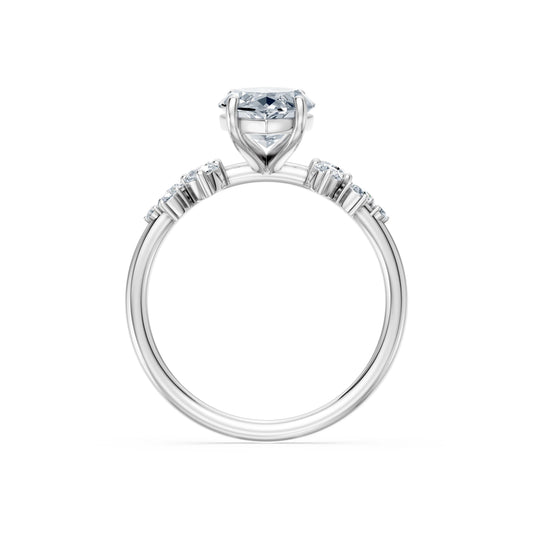
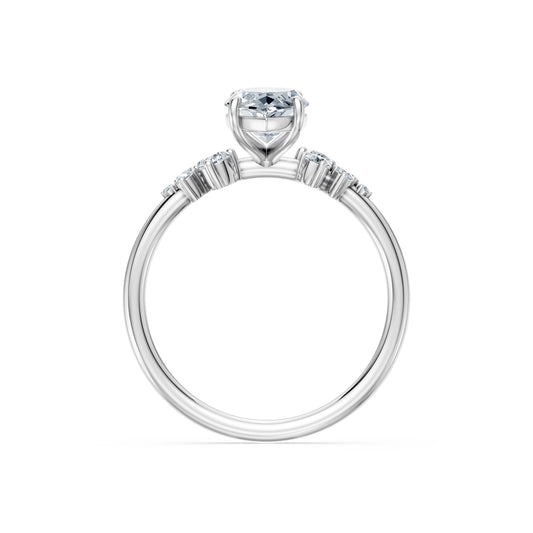
Marquise Lab Grown Diamond Cluster Engagement Ring 2.0ct | Qutahia Jewellery
Regular price From $3,045.00Regular price -
Marquise Lab Grown Diamond Cluster Engagement Ring 1.5ct | Qutahia Jewellery
Regular price From $2,296.00Regular price -
Marquise Lab Grown Diamond Cluster Engagement Ring 1.0ct | Qutahia Jewellery
Regular price From $1,830.00Regular price -
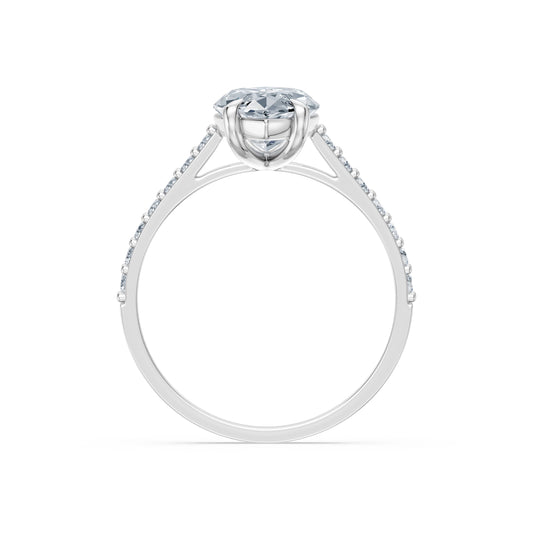
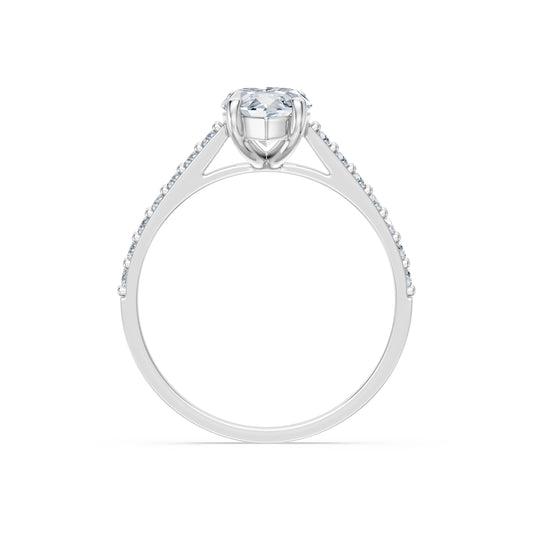
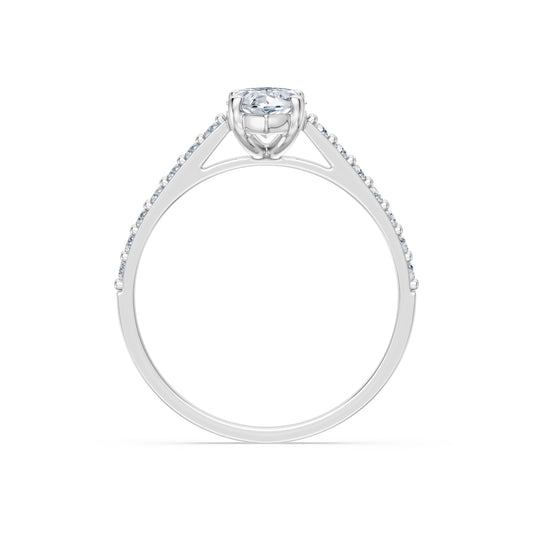
Marquise Lab Grown Diamond Pave Engagement Ring 2.0ct | Qutahia Jewellery
Regular price From $2,880.00Regular price -
Marquise Lab Grown Diamond Pave Engagement Ring 1.5ct | Qutahia Jewellery
Regular price From $2,176.00Regular price -
Marquise Lab Grown Diamond Pave Engagement Ring 1.0ct | Qutahia Jewellery
Regular price From $1,695.00Regular price -
Marquise Lab Grown Diamond Hidden Halo Engagement Ring 2.0ct | Qutahia Jewellery
Regular price From $2,880.00Regular price -
Marquise Lab Grown Diamond Hidden Halo Engagement Ring 1.5ct | Qutahia Jewellery
Regular price From $2,176.00Regular price -
Marquise Lab Grown Diamond Hidden Halo Engagement Ring 1.0ct | Qutahia Jewellery
Regular price From $1,680.00Regular price -
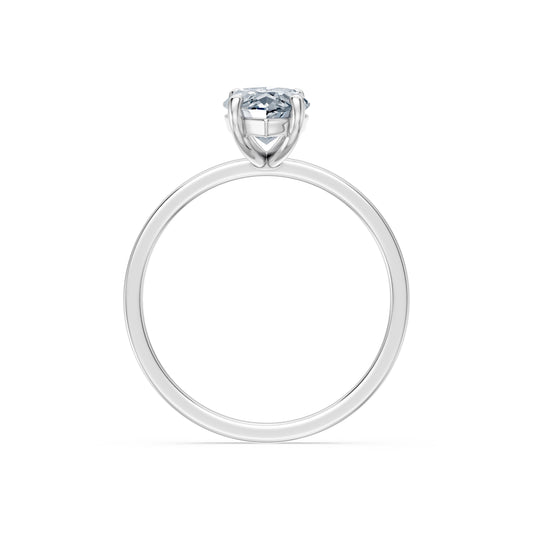
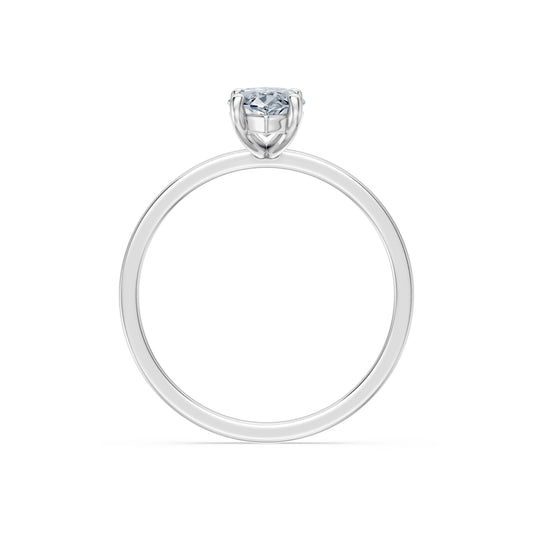
Marquise Lab Grown Diamond Solitaire Engagement Ring 2.0ct | Qutahia Jewellery
Regular price From $2,835.00Regular price -
Marquise Lab Grown Diamond Solitaire Engagement Ring 1.5ct | Qutahia Jewellery
Regular price From $2,086.00Regular price -
Marquise Lab Grown Diamond Solitaire Engagement Ring 1.0ct | Qutahia Jewellery
Regular price From $1,575.00Regular price -
Solitaire Eternity Diamond Ring Marquise 0.1ct | Qutahia Jewellery
Regular price From $578.00Regular price -
Solitaire Eternity Diamond Ring Marquise 0.15ct | Qutahia Jewellery
Regular price From $609.00Regular price -
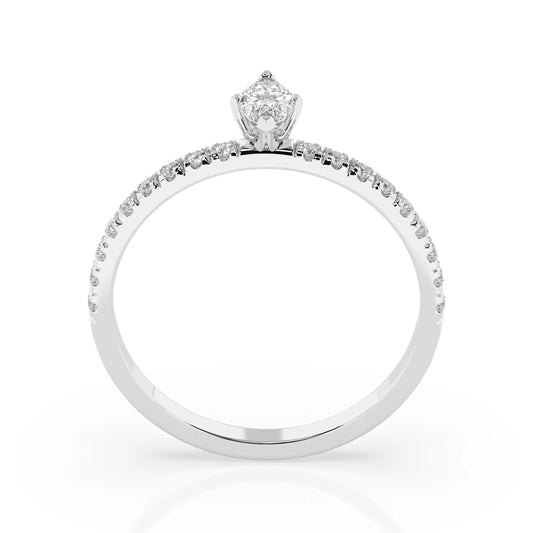
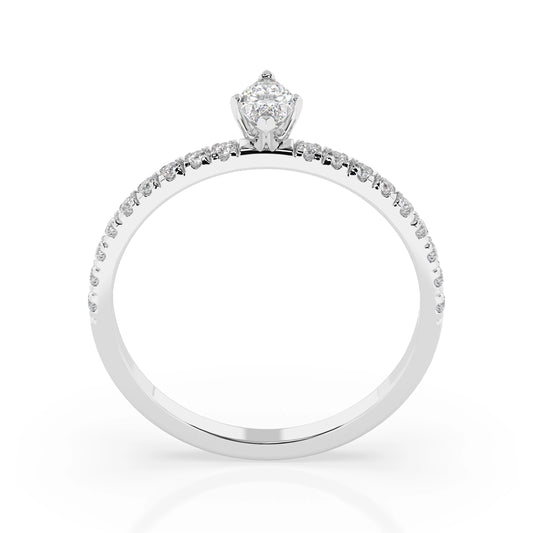
Solitaire Diamond Ring Marquise 0.1ct | Qutahia Jewellery
Regular price From $522.00Regular price -
Solitaire Diamond Ring Marquise 0.15ct | Qutahia Jewellery
Regular price From $589.00Regular price





















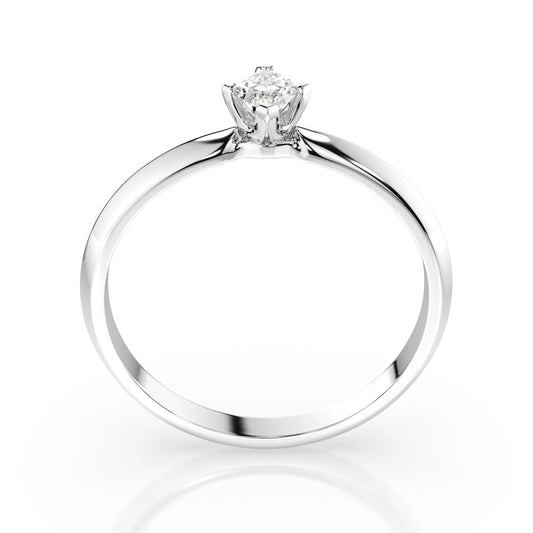

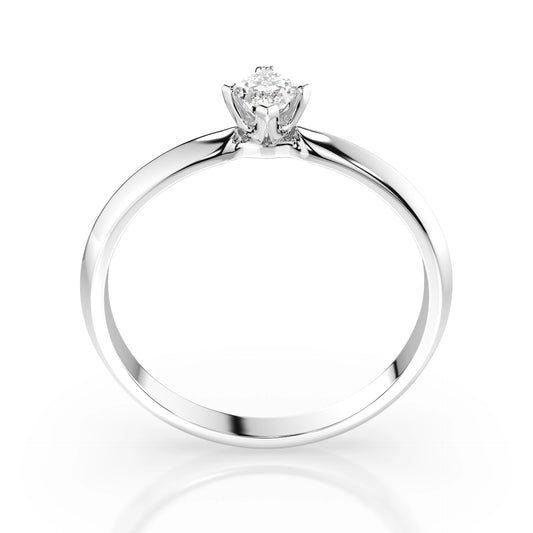
Are marquise rings dated?
We should deal with this one first, because it is the reason most people hesitate.
The marquise had a very visible peak in the 1980s, often in yellow gold with a high setting and a cluster of small accent stones. A lot of people picture that specific ring — usually on an older relative's hand — and conclude the shape itself is dated.
It is worth separating the two. The shape is from the 1740s, cut for Louis XV and named after the Marquise de Pompadour; jewellers still call it a navette, French for little boat. What dated was a particular 1980s treatment of it, not the outline. Set the same stone low, in a plain band, with clean prongs, and it reads as modern and slightly unusual — which is precisely why it has come back.
If you want the shape without any risk of the association, avoid a high crown setting and heavy accent clusters. Those two choices carry the decade, not the diamond.
The largest look per carat of any shape
Carat measures weight, not size, and shapes distribute that weight very differently. The marquise is the most efficient of all: it carries less mass hidden in the pavilion and more of it spread across the top.
A one-carat marquise typically measures around 10mm by 5mm. A one-carat round measures 6.5mm across. Same weight, and the marquise covers substantially more finger. If maximum visual size for a given budget is the goal, no other shape competes.
The trade-off is that the extra length is narrow. A marquise looks long rather than broad, so it flatters slim fingers and can overwhelm very small hands.
Two things to check before buying a marquise
The bow tie. Like every elongated brilliant cut, a marquise has a darker band across its middle where your own head blocks light from reaching the centre facets. Because a marquise is more stretched than an oval, the bow tie tends to be more pronounced. A faint one is normal and unavoidable; a hard black bar means the stone is cut too deep or too shallow. Every marquise here is checked face-up before it ships.
The points. Those two tips are the thinnest part of any diamond and the easiest to chip. A marquise should never be set with an ordinary round prong at the ends. It needs a V-prong that wraps the point on both sides, and every setting in this collection uses one. If you are shown a marquise elsewhere without V-prongs, that is a real durability problem, not a styling preference.
Length-to-width ratio
The marquise is the most ratio-sensitive shape of all, because the whole design is about elongation:
- 1.75 to 1.85 — shorter and fuller. Softer outline, less dramatic.
- 1.85 to 2.05 — the classic proportion. Where most well-cut marquises land.
- Above 2.10 — very slender. Striking, but the bow tie shows more and the points get more fragile.
If you are buying as a surprise, stay near 1.95.
Choosing the setting
The marquise takes direction well. Set north-south it is at its most elongating; set east-west across the finger it becomes something much more contemporary and is one of the few shapes that genuinely works sideways.
- Solitaire — the cleanest way to wear the shape, and the least likely to date.
- Three stone — marquise side stones angled outward are a classic combination, and they exaggerate the sweep.
- Hidden halo — lift and extra perceived size without changing the outline from above.
- Pavé — sparkle along the shoulders, which draws the eye down the length of the stone.
Wedding bands for a marquise
This is the shape's one genuine inconvenience. A marquise is long and pointed, so a straight band usually cannot sit flush against it. The workable options:
- A chevron or V-shaped band that nests around the point. The traditional answer, and it looks deliberate.
- A contoured band curved to the setting. Fits precisely, but only that ring.
- A raised setting with a straight band. If the marquise sits high enough, a plain band passes underneath.
Worth deciding before the ring is made. Setting height is easy to plan and awkward to change later.
What a marquise engagement ring costs
This collection runs from £500 to £4,250. Three things drive that range: centre stone weight, lab grown versus natural, and gold carat — in that order.
Most of these rings use lab grown diamonds, which is why a two-carat marquise sits where a natural half-carat often does. Lab grown stones are diamond by every physical measure, distinguishable only with specialist equipment. If you specifically want a mined stone, we will quote it; expect a considerably higher figure for the same appearance.
The choice between 9ct, 14ct and 18ct gold is about wear rather than status. 9ct is harder and resists scratching; 18ct is warmer in colour and softer. For an everyday ring, 14ct is the common landing point.
Common questions
How much is a 1 carat marquise engagement ring?
In this collection a one-carat lab grown marquise in solid gold starts in the low four figures, and smaller stones begin at £500. A natural one-carat marquise of comparable quality would be several times that.
Do marquise diamonds chip easily?
The points are the vulnerable part, and yes, an unprotected point can chip against a hard knock. Set with V-prongs — as every ring here is — the risk drops sharply, and a marquise worn sensibly lasts as well as any other shape.
Marquise or oval — which looks bigger?
Marquise, clearly. Both spread weight upward, but the marquise goes furthest: roughly 10mm long at one carat against an oval's 7.7mm. The oval is the softer, safer-looking of the two; the marquise is the bolder.
Can I have a different ratio or setting?
Yes. Everything here is made to order in our own workshop, so stone size, ratio, gold carat and setting are all specifiable. If what you want is not shown, commission it — the first conversation costs nothing.