
Cluster Engagement Rings in Solid 9ct, 14ct & 18ct Gold
A cluster engagement ring arranges several smaller diamonds so that together they read as one larger stone. It is the oldest trick in jewellery and still the most effective: because diamond price per carat climbs steeply with size, ten small stones cost a fraction of one big one while covering a similar area of finger.
This is the setting to choose when presence matters more than provenance. All eleven designs use lab grown diamonds in solid 9ct, 14ct or 18ct gold — never plated — from £1,600, made to order in 10 to 14 days.
-
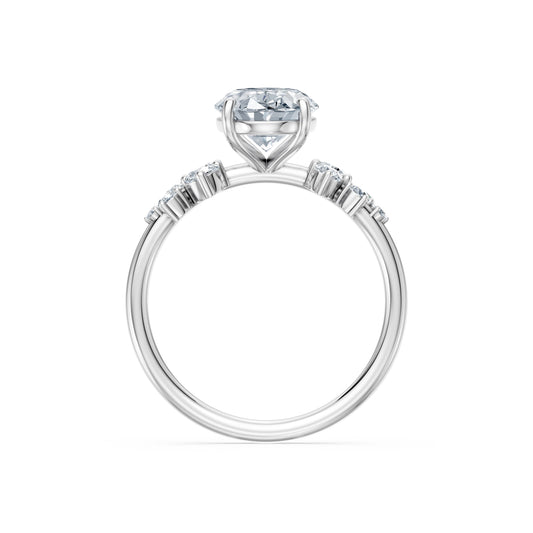
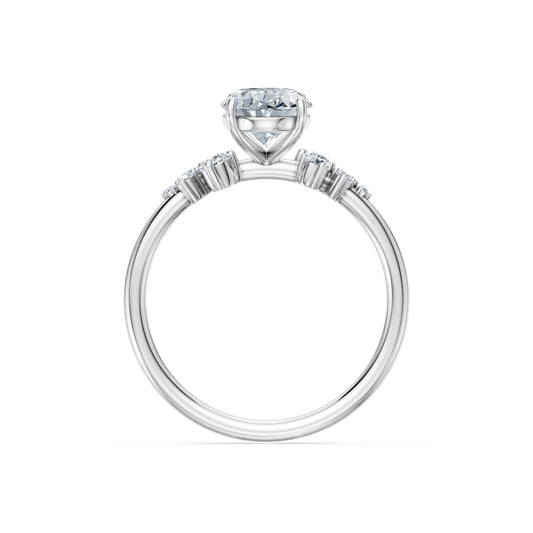
Oval Lab Grown Diamond Cluster Engagement Ring 2.0ct | Qutahia Jewellery
Regular price From $2,005.00Regular price$2,505.00Sale price From $2,005.00Sale -
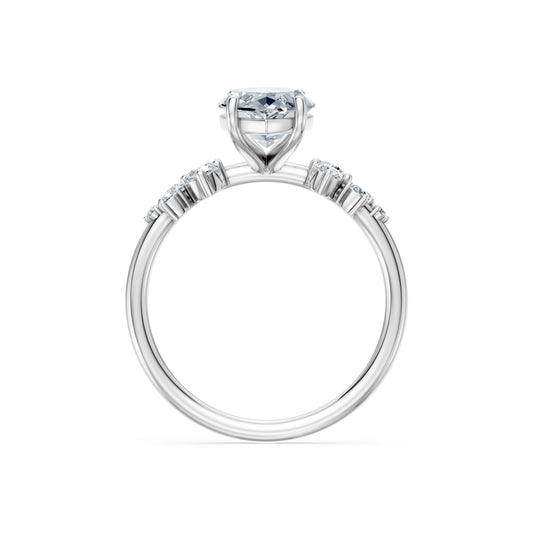
Marquise Lab Grown Diamond Cluster Engagement Ring 2.0ct | Qutahia Jewellery
Regular price From $2,740.00Regular price$3,045.00Sale price From $2,740.00Sale -
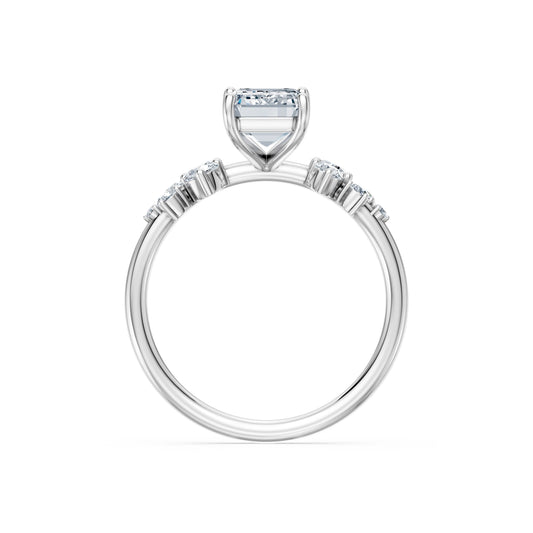
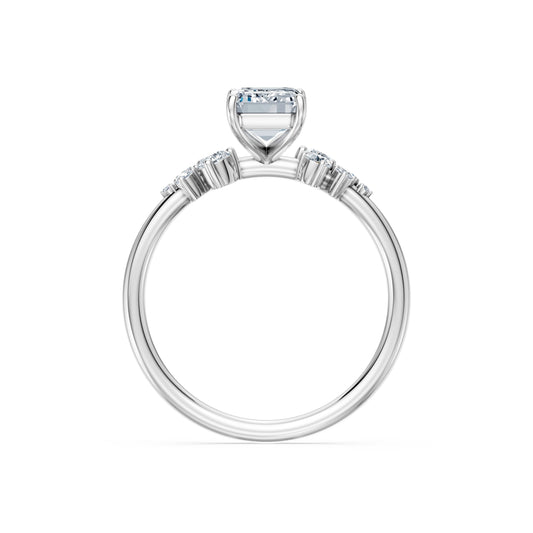
Emerald Lab Grown Diamond Cluster Engagement Ring 2.0ct | Qutahia Jewellery
Regular price From $2,295.00Regular price$2,550.00Sale price From $2,295.00Sale -
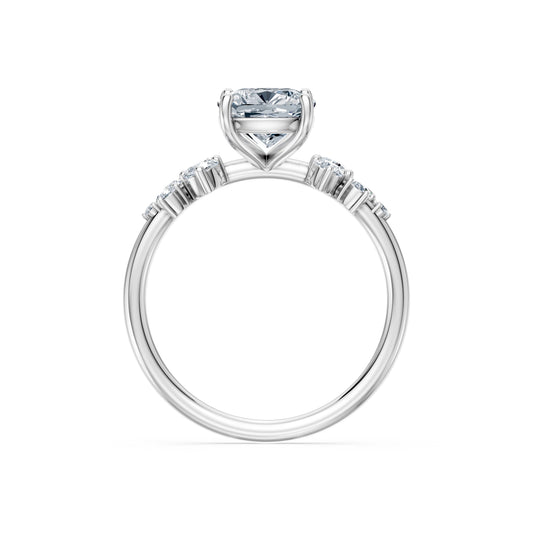
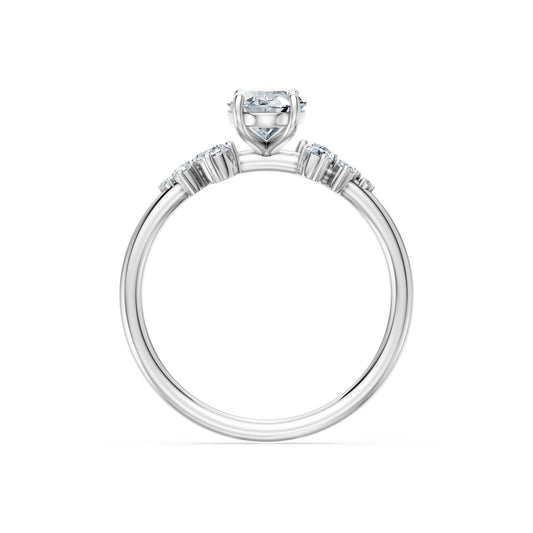
Cushion Lab Grown Diamond Cluster Engagement Ring 2.0ct | Qutahia Jewellery
Regular price From $2,335.00Regular price$2,595.00Sale price From $2,335.00Sale -
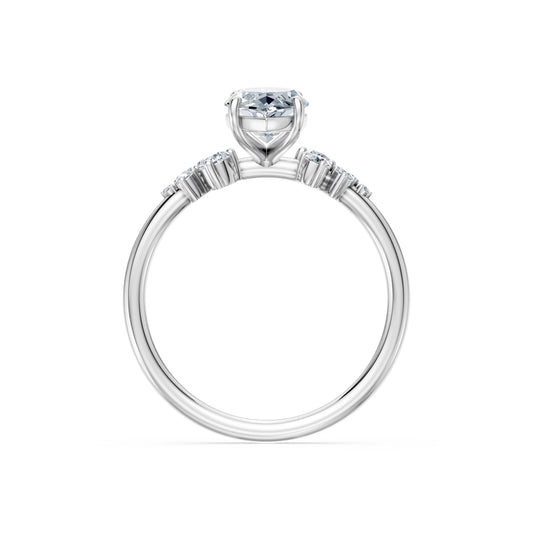
Oval Lab Grown Diamond Cluster Engagement Ring 1.5ct | Qutahia Jewellery
Regular price From $1,585.00Regular price$1,980.00Sale price From $1,585.00Sale -
Marquise Lab Grown Diamond Cluster Engagement Ring 1.5ct | Qutahia Jewellery
Regular price From $1,835.00Regular price$2,296.00Sale price From $1,835.00Sale -
Emerald Lab Grown Diamond Cluster Engagement Ring 1.5ct | Qutahia Jewellery
Regular price From $1,585.00Regular price$1,980.00Sale price From $1,585.00Sale -
Oval Lab Grown Diamond Cluster Engagement Ring 1.0ct | Qutahia Jewellery
Regular price From $1,295.00Regular price$1,620.00Sale price From $1,295.00Sale -
Marquise Lab Grown Diamond Cluster Engagement Ring 1.0ct | Qutahia Jewellery
Regular price From $1,465.00Regular price$1,830.00Sale price From $1,465.00Sale -
Emerald Lab Grown Diamond Cluster Engagement Ring 1.0ct | Qutahia Jewellery
Regular price From $1,310.00Regular price$1,635.00Sale price From $1,310.00Sale -
Cushion Lab Grown Diamond Cluster Engagement Ring 1.0ct | Qutahia Jewellery
Regular price From $1,355.00Regular price$1,695.00Sale price From $1,355.00Sale









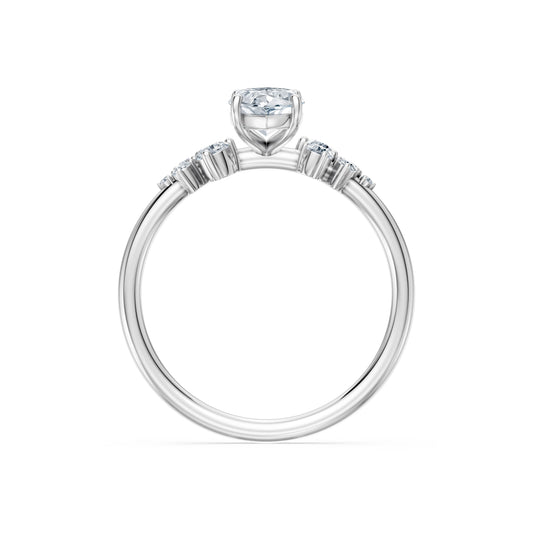

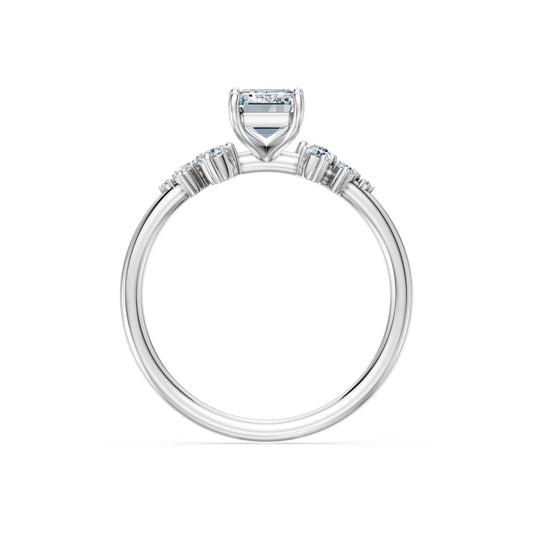

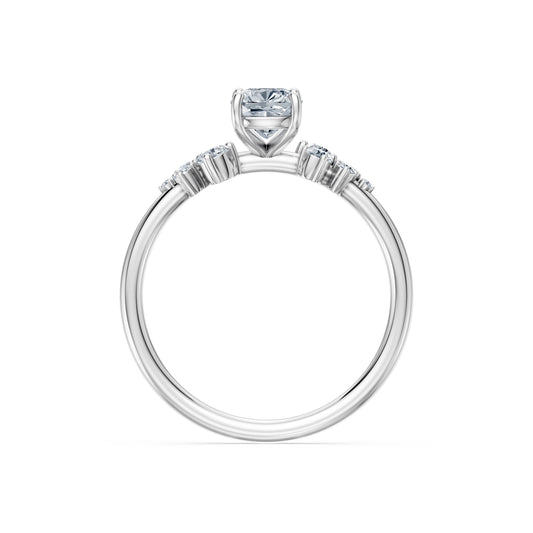
Why a cluster gives more ring for the money
Diamond pricing is not linear with weight, and this is the fact the cluster is built on.
A 1 carat stone does not cost twice what a 0.5 carat stone costs. It costs considerably more than twice, because large rough is rarer than small rough. Push on to 2 carats and the curve steepens again. Meanwhile the visible area only grows with the square root of that weight.
A cluster inverts the maths. Buy the diamond in small pieces and arrange them tightly, and you get the face-up spread of a much larger stone for a fraction of the outlay. In practical terms, a cluster head can occupy the finger like a 1.5 carat solitaire while costing what a 0.4 carat one does.
That is the honest case for it, and it is a strong one if visual size is what you are buying.
What you give up in exchange
It would be dishonest to stop there, so here is the other side.
Light behaves differently. A single well-cut stone returns light as broad, defined flashes. A cluster returns many small ones. From arm's length it can look brighter than a solitaire; up close it reads as sparkle rather than as a diamond. Some people prefer that, but it is a different effect and worth seeing before deciding.
There is more to maintain. Twenty small stones means twenty settings, and small stones are held by small beads or claws. A cluster wants checking annually, and it collects dirt in the gaps faster than a plain solitaire does.
Resale is weaker. A single certified stone can be removed and sold on its own. Many small stones cannot. If you view an engagement ring as partly an asset, a solitaire holds value better.
If the maintenance is what puts you off but the size is what you want, a hidden halo is the middle ground: one real centre stone, with the extra brightness coming from beneath.
Cluster, halo or three stone — which is which?
These three get confused constantly, and the distinction is simply where the weight sits.
- Cluster — no dominant centre, or only a slightly larger one. The whole head is the design.
- Halo — one clear centre stone with a ring of smaller stones framing it. The centre still leads.
- Three stone — one centre with two deliberate side stones, spread horizontally rather than concentrically.
A cluster is the least expensive of the three for a given apparent size, and the three stone is usually the most.
An old design, not a modern shortcut
Clusters are sometimes dismissed as a cheap way to fake a big stone. That reading ignores the history. Georgian and Victorian jewellers used clusters constantly — not to economise, but because before modern cutting technology, several small well-cut stones outperformed one large poorly-cut one. Antique cluster rings from that period are highly collectable today.
What changed is that big stones became reliably cuttable. The cluster survived anyway, because the look it produces is genuinely its own.
What a cluster engagement ring costs
This collection runs from £1,600 to £3,750, in oval, marquise, emerald and cushion arrangements.
What moves the price is total diamond weight and the number of stones to be set — labour is real, and a forty-stone head takes a jeweller far longer than a solitaire. Gold carat barely registers: 9ct is harder and more scratch-resistant, 18ct is warmer and softer, 14ct sits between.
Common questions
Do cluster rings look cheap?
A badly made one does, and the tell is always the setting rather than the stones — uneven gaps, visible metal between diamonds, stones sitting at different heights. A well-set cluster reads as one continuous surface of light. This is a setting where craftsmanship shows more than carat.
Can a cluster ring be resized?
If the diamonds are confined to the head, yes, normally. If they continue down the band, resizing is limited. Tell us your size at the point of order and it is made correctly first time; UK resizing is free with us either way.
Do stones fall out of cluster rings?
Not if they are set properly and checked. The risk is real but it is a maintenance question, not a design flaw — have the settings looked at once a year, as you would with any ring worn daily.
Can I have a cluster made to my own design?
Yes, and clusters suit commissioning particularly well because the arrangement is entirely open. Everything is made to order in our own workshop. If what you want is not shown, commission it — the first conversation costs nothing.
Frequently asked questions
What is a cluster engagement ring?
A setting where several smaller diamonds are grouped closely together to mimic the visual size of one larger stone, at a lower cost per carat overall.
Is a cluster ring a good alternative to a large solitaire?
Yes — it's one of the most cost-effective ways to get a big visual impact, since grouped smaller stones cost less combined than one large diamond of equivalent apparent size.
What's the starting price for a cluster ring?
From around £1,600 in solid gold, made to order with your choice of natural or lab grown diamonds.
Are cluster rings harder to clean than a solitaire?
A little — dust and product can collect between the grouped stones, so a soft-brush clean every few weeks keeps them at full sparkle.