
Princess Cut Engagement Rings in Solid 9ct, 14ct & 18ct Gold
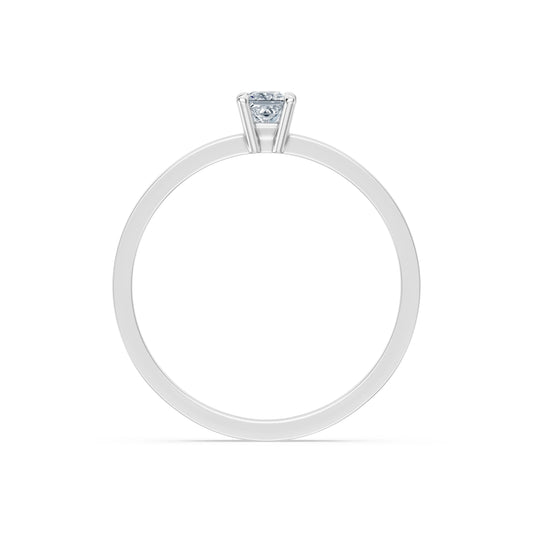
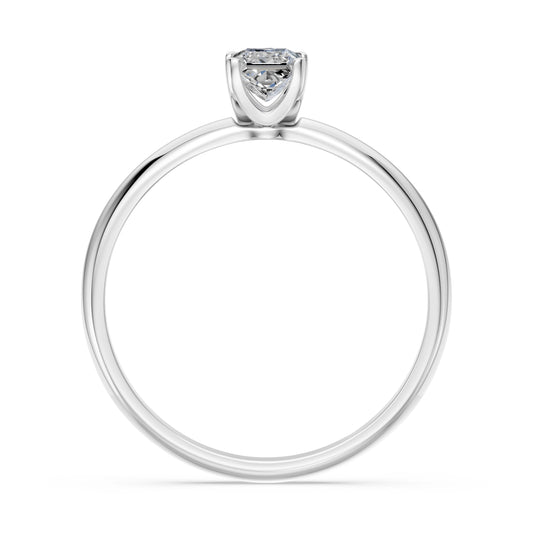
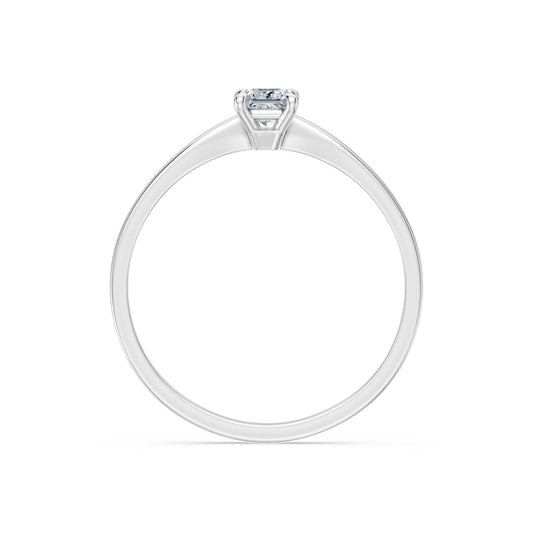
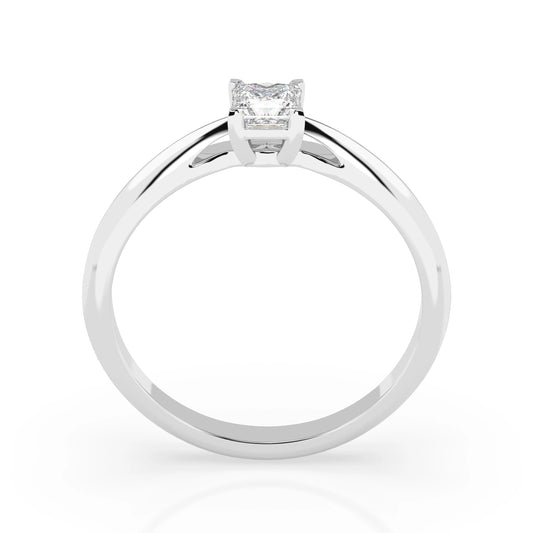
The princess cut is the square answer to the round brilliant. It uses the same brilliant faceting — so it sparkles the same way — but keeps a sharp, clean geometry that the round cannot. It is also the best-value brilliant shape there is, and for a straightforward reason: cutting a square from a rough diamond wastes far less material than grinding it into a circle, and that saving reaches the price.
Every princess cut engagement ring here holds a natural diamond and is set in solid 9ct, 14ct or 18ct gold — never plated, never gold-filled — in yellow, white or rose. Prices start from £850, made to order in 10 to 14 days, with the corners protected on every setting.
-
Solitaire Diamond Ring Princess 0.3ct | Qutahia Jewellery
Regular price From $960.00Regular price -
Solitaire Eternity Diamond Ring Princess 0.17ct | Qutahia Jewellery
Regular price From $1,411.00Regular price -
Solitaire Diamond Ring Princess 0.17ct | Qutahia Jewellery
Regular price From $1,381.00Regular price -
Solitaire Eternity Diamond Ring Princess 0.3ct | Qutahia Jewellery
Regular price From $900.00Regular price -
Solitaire Eternity Diamond Ring Princess 0.3ct | Qutahia Jewellery
Regular price From $1,155.00Regular price -
Solitaire Diamond Ring Princess 0.17ct | Qutahia Jewellery
Regular price From $1,201.00Regular price -
Solitaire Diamond Ring Princess 0.4ct | Qutahia Jewellery
Regular price From $1,005.00Regular price -
Solitaire Diamond Ring Princess 0.17ct | Qutahia Jewellery
Regular price From $1,291.00Regular price -
Solitaire Ring (Princess), 0.3 ct ��� 101-10190(0.30)PR
Regular price From $1,266.00Regular price

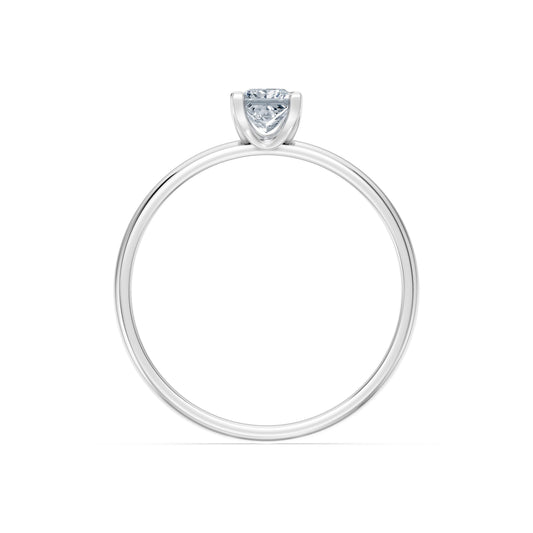

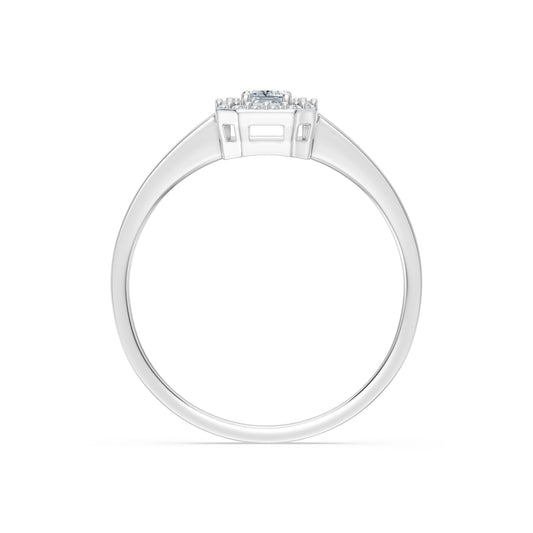


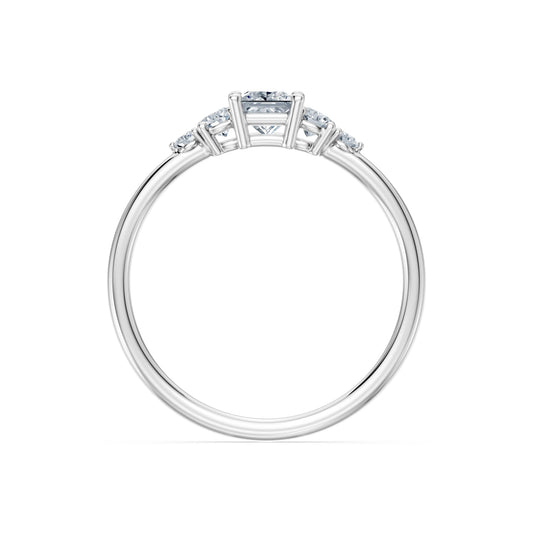

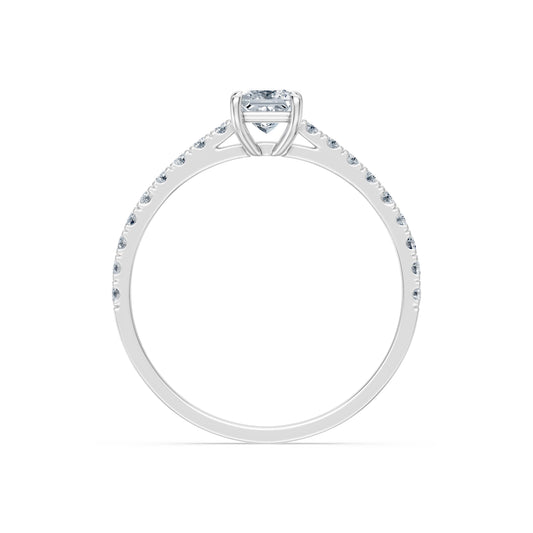




Why a princess cut costs less than a round of the same weight
This is the shape's strongest argument and it is worth understanding properly, because it is not a discount — it is arithmetic.
Diamond rough tends to form as an octahedron, roughly two pyramids joined base to base. Cutting a round brilliant from that shape means grinding away the corners, and a finished round typically retains around 40% of the original rough. A princess cut is close to the natural shape of the crystal, so it retains something closer to 80%.
Half the waste means a lower price per carat for the same quality of stone. In practice a princess cut can run 20–30% below a round brilliant of equal carat, colour and clarity. If your priority is the largest good-quality natural diamond your budget allows, this is where to look first.
The corners: the one real weakness
A princess cut has four sharp 90-degree corners, and they are the thinnest points on the stone. Diamond is the hardest natural material but it is not the toughest — hardness resists scratching, toughness resists chipping, and a sharp diamond corner catches on a door frame just as readily as anything else.
The fix is entirely in the setting. A princess should be held by V-prongs or a protective basket that cup each corner rather than sitting beside it. Every setting in this collection does that. A princess in four plain round prongs with exposed corners is a genuine durability problem, and it is worth checking wherever you buy.
If you want the geometry without the exposure, the emerald cut uses cropped corners instead of sharp ones and sidesteps the issue entirely.
Are princess cut rings still in style?
The princess peaked hard in the 2000s and has since been overtaken by the oval, which is why the question comes up. But the shape is not a trend cut in the way a 1980s cluster setting was — it is simply a square brilliant, and squares do not go out of print.
What has changed is context. A princess set low in a plain solid-gold band looks current; the same stone in a wide white-gold channel-set band with rows of accent squares looks unmistakably of its decade. As with most shapes, the setting carries the date, not the stone.
There is a practical upside to being out of fashion: demand shapes price. A princess cut today buys more diamond than the equally-sized shape everyone is currently chasing.
What to prioritise when choosing the stone
Because a princess uses brilliant faceting, it behaves like a round on clarity and unlike an emerald cut: the busy sparkle hides small inclusions well. SI1 is usually safe and the money is better spent elsewhere.
Colour is where a princess is less forgiving. The pointed corners concentrate body colour, so a faint yellow tint tends to show at the edges before it shows in the middle. Two useful consequences:
- In white gold, go a grade higher on colour than you would for a round — the metal gives the stone nothing to hide behind.
- In yellow or rose gold, a warmer stone is an advantage rather than a compromise, and you can drop a grade or two without seeing it.
Ratio should sit between 1.00 and 1.05. Beyond that the square starts reading as a rectangle, which is a different look and usually an accident rather than a choice.
Choosing the setting
- Solitaire — the cleanest treatment, and the one least likely to look tied to a decade.
- Hidden halo — lifts the stone and adds perceived size while keeping the square outline pure from above.
- Three stone — works well with a princess because the flat sides sit flush against the side stones with no gap.
- Pavé — sparkle along the shoulders leading into the square.
One advantage worth mentioning: because a princess has straight edges, a plain straight wedding band sits flush against it with no gap and no shaped band required. Of all the fancy shapes, this is the easiest to pair.
What a princess cut engagement ring costs
This collection runs from £850 to £3,000, and every stone is natural rather than lab grown — unusual for us, and it reflects how well natural rough suits this shape.
The three levers on price are centre stone weight, colour and clarity grade, and gold carat, in roughly that order. Gold carat moves the total least: 9ct is harder and more scratch-resistant, 18ct is richer in colour and softer, 14ct sits between them. It is a wear decision rather than a quality ladder.
If you would prefer a lab grown princess for a larger stone at the same budget, we can source and set one — just ask.
Common questions
Is a princess cut cheaper than a round?
Yes, typically 20–30% less for the same carat, colour and clarity. The saving comes from cutting yield, not from lower quality: a princess wastes about half as much of the original rough as a round does.
Does a princess cut look smaller than a round?
Slightly, face-up, because a princess carries more of its weight in depth. A one-carat princess measures around 5.5mm square against a round's 6.5mm diameter. The square outline covers a comparable area, but the round reads a touch wider.
Do princess cut diamonds chip?
The corners can, if they are left exposed. Set with V-prongs or a protective basket — as every ring here is — the risk is small and comparable to any other shape.
Can I have a different stone or setting?
Yes. Everything is made to order in our own workshop, so stone size, grade, gold carat and setting can all be specified. If what you want is not shown, commission it — the first conversation costs nothing.